
Understanding Gynecomastia
What is Gynecomastia?
Gynecomastia is the benign enlargement of male glandular breast tissue, often presenting as a firm, rubbery mass beneath the nipple area. The affected area can be tender, or completely painless. Gynecomastia is typically self-limited — resolving on its own as hormone levels stabilize. However, in approximately 8% of cases, gynecomastia persists beyond adolescence, leading to emotional distress and discomfort.
Causes of Gynecomastia
Gynecomastia is often a result of hormonal imbalance between estrogen and testosterone. When estrogen levels are too high or testosterone levels drop, excess breast tissue can develop. While this is most common among adolescent boys due to emerging hormonal changes, gynecomastia can result from various factors. Certain medications, anabolic steroid use, underlying health conditions, and even genetic predispositions can influence the presentation of gynecomastia. Certain behaviors may contribute to gynecomastia by altering typical hormone regulation. One such example would be marijuana consumption, as THC may lower testosterone levels and increase estrogen activity. Although the condition is benign, it can create significant psychological and social challenges.

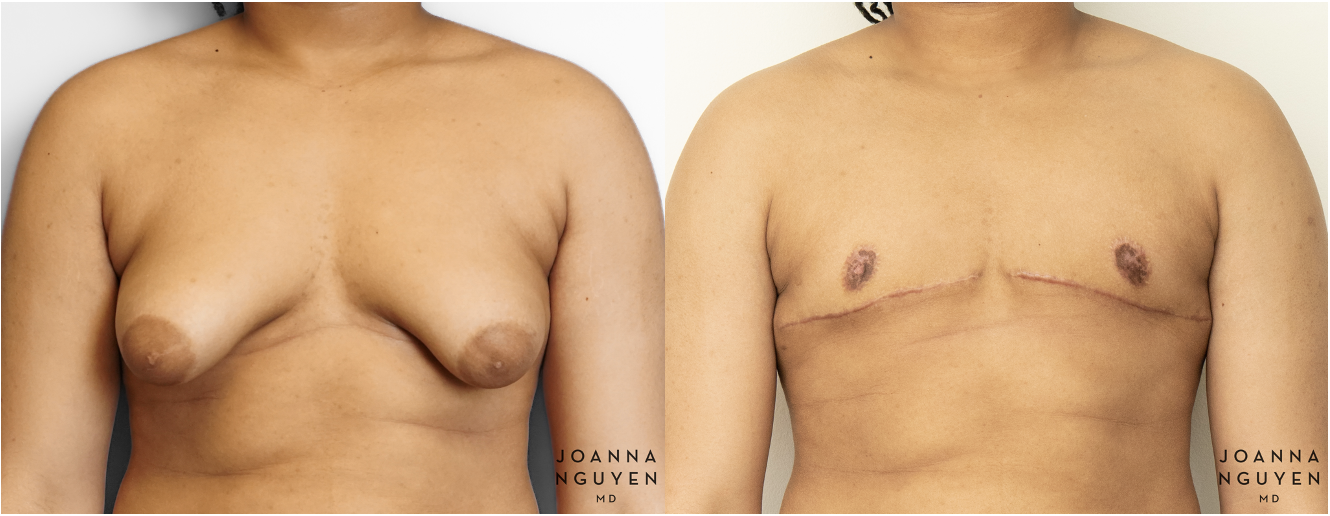
How is Gynecomastia Treated?
If gynecomastia does not resolve naturally, corrective surgery becomes a viable option to restore a flatter, more masculine chest contour. To address persisting gynecomastia, Dr. JoAnna Nguyen utilizes a combination of liposuction and direct excision of glandular tissue. This comprehensive approach allows for the effective removal of both excess fatty tissue and dense glandular tissue that cannot be treated with liposuction alone.
If you are experiencing gynecomastia, schedule your consultation with Dr. Nguyen to discuss your personal treatment plan.
Dr. JoAnna Nguyen is now accepting most PPO insurance plans for eligible surgical procedures, including gynecomastia. If you’ve been considering surgery and have a PPO policy, our team will work with you to determine whether your procedure may be partially or fully covered. Navigating insurance can be overwhelming, we’re happy to help you understand your options with transparency and care.